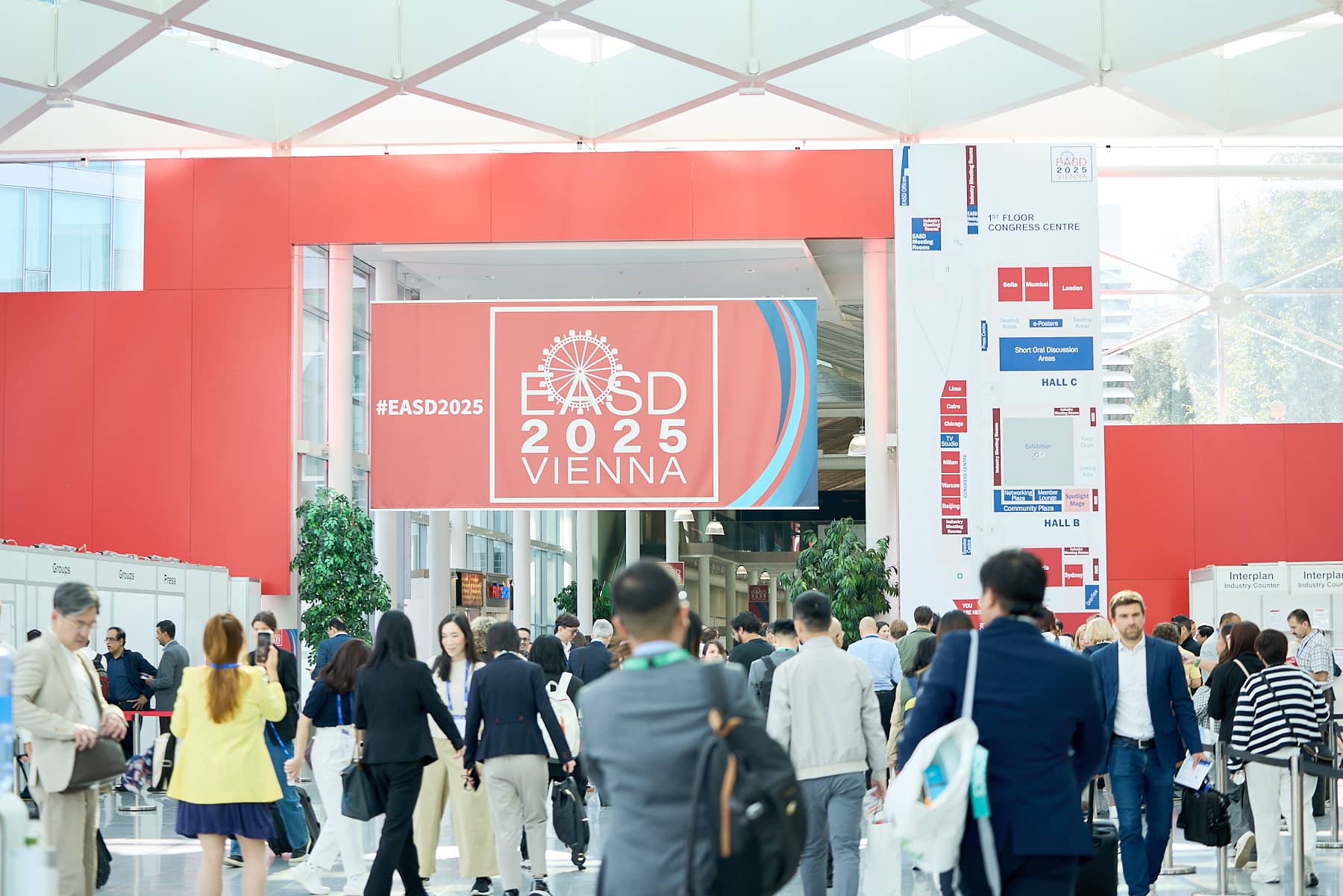
EASD 2025 • Vienna, Austria

Global Media Coverage

Driving global media impact for groundbreaking diabetes research for the European Association for the Study of Diabetes

Type 1 & 2
Diabetes Coverage
Multiple
Breakthrough Studies
Global
Media Impact

Driving global media impact for groundbreaking diabetes research

Coordinating the EASD 2025 press programme in Vienna to deliver worldwide coverage for landmark diabetes studies.

We delivered a high‑impact congress media programme across diabetes breakthroughs (type 1 and type 2), achieving worldwide pick‑up led by major outlets and newswires. Strategic embargoes and close author/journal coordination amplified coverage at the exact moment of presentation, with simultaneous publications driving scale.

Objectives

Maximising media attention and showcasing ground-breaking research

Global visibility

Deliver high-impact international coverage for key studies presented at EASD 2025.

Journal coordination

Align media releases with major journal publications to amplify reach and credibility.

Media engagement

Equip and support journalists with clear assets, video, and interviews to maximise story quality.

All photographs courtesy of https://www.easd.org/annual-meeting/easd-2025/image-gallery/

Our Approach

A tailored strategy to maximise coverage and audience engagement

  • Program and Abstract Analysis
    Tony Kirby PR reviewed more than 1,000 abstracts, identifying the most newsworthy studies and shaping clear, impactful press materials.

  • Strategic Media Coordination

    Managed accreditation, scheduling, and on‑site press operations to support journalists attending in person and online.

  • Global Media Outreach
    Used Tony Kirby PR’s international network to distribute content and ensure global reach across key regions.
  • Focus on Early Releases

    Issued embargoed materials and early press releases for priority abstracts to build momentum before the congress.

Diabetes highlights

Major Type 2 and Type 1 diabetes news at EASD 2025

Landmark trials in Type 2 diabetes and GLP-1 therapies dominated the headlines, with global interest also in new approaches to Type 1 diabetes, disease burden, and lifestyle risk.

Type 2 diabetes and GLP-1 therapies

Headline trials and treatment advances

Tirzepatide in children with Type 2 diabetes (SURPASSPEDS)
Simultaneous publication in The Lancet.
The SURPASSPEDS trial reported substantial improvements in glycaemic control and weight outcomes in children and adolescents with Type 2 diabetes treated with tirzepatide.
Coverage included
Oral GLP-1 therapy: orforglipron
Simultaneous publication in NEJM.
An oral, non-peptide GLP-1 receptor agonist showed promising weight-loss and glucose-lowering effects, offering an alternative to injectable GLP-1s and generating intense global media interest.
Coverage included
Behaviour, risk and lifestyle stories
Multiple studies explored how behaviour and environment shape diabetes risk and outcomes, generating a broad lifestyle news wave alongside the clinical trial coverage.
  • Food taste changes on GLP-1s (BILD, The Guardian, Daily Mail, Hindustan Times and others).
  • Diabetes and depression; smoking risk; gestational diabetes links with autism/ADHD.
  • Diet patterns lowering risk; household clustering of Type 2 diabetes.
  • Rural early-life Type 1 diabetes risk and environmental exposure.

Type 1 diabetes and disease burden

New therapies, estimates and long-term risk

Type 1 diabetes – baricitinib (BANDIT)
Immunomodulation with baricitinib was investigated as a way to preserve beta-cell function in people newly diagnosed with Type 1 diabetes.
Coverage included
Type 1 diabetes – immunotherapy (MELD-ATG)
Simultaneous publication in The Lancet.
The MELD-ATG study examined whether low-dose anti-thymocyte globulin could delay progression of Type 1 diabetes in high-risk individuals.
Coverage included
Global Type 1 diabetes estimates and the “missing people”
Updated global estimates for Type 1 diabetes highlighted major gaps in diagnosis and care, including large numbers of “missing” people with undetected disease, particularly in low- and middle-income countries.
Coverage included
ANSA Extensive downstream EU and LatAm syndication
Verapamil (VER-A-T1D)
Follow-up data on the calcium-channel blocker verapamil as a potential beta-cell-preserving therapy in Type 1 diabetes.
Coverage included
Dr Wharton – orforglipron press conference

The first EASD 2025 press conference (Tuesday 16 September) featured Dr Sean Wharton discussing the Orforglipron oral GLP-1 data, providing media with key clinical context and implications for obesity and Type 2 diabetes care.